PromptQL Traces
Introduction
PromptQL traces provide detailed execution monitoring for your PromptQL API operations using OpenTelemetry format. Track thread interactions, API requests, and performance metrics to debug issues and optimize your AI-powered applications.
PromptQL traces capture:
- Thread operations (start, continue)
- API requests (natural language queries, program execution)
- Request duration and status
- Thread and trace relationships
Accessing traces
Navigate to the Insights tab in your project dashboard, then select PromptQL Traces.
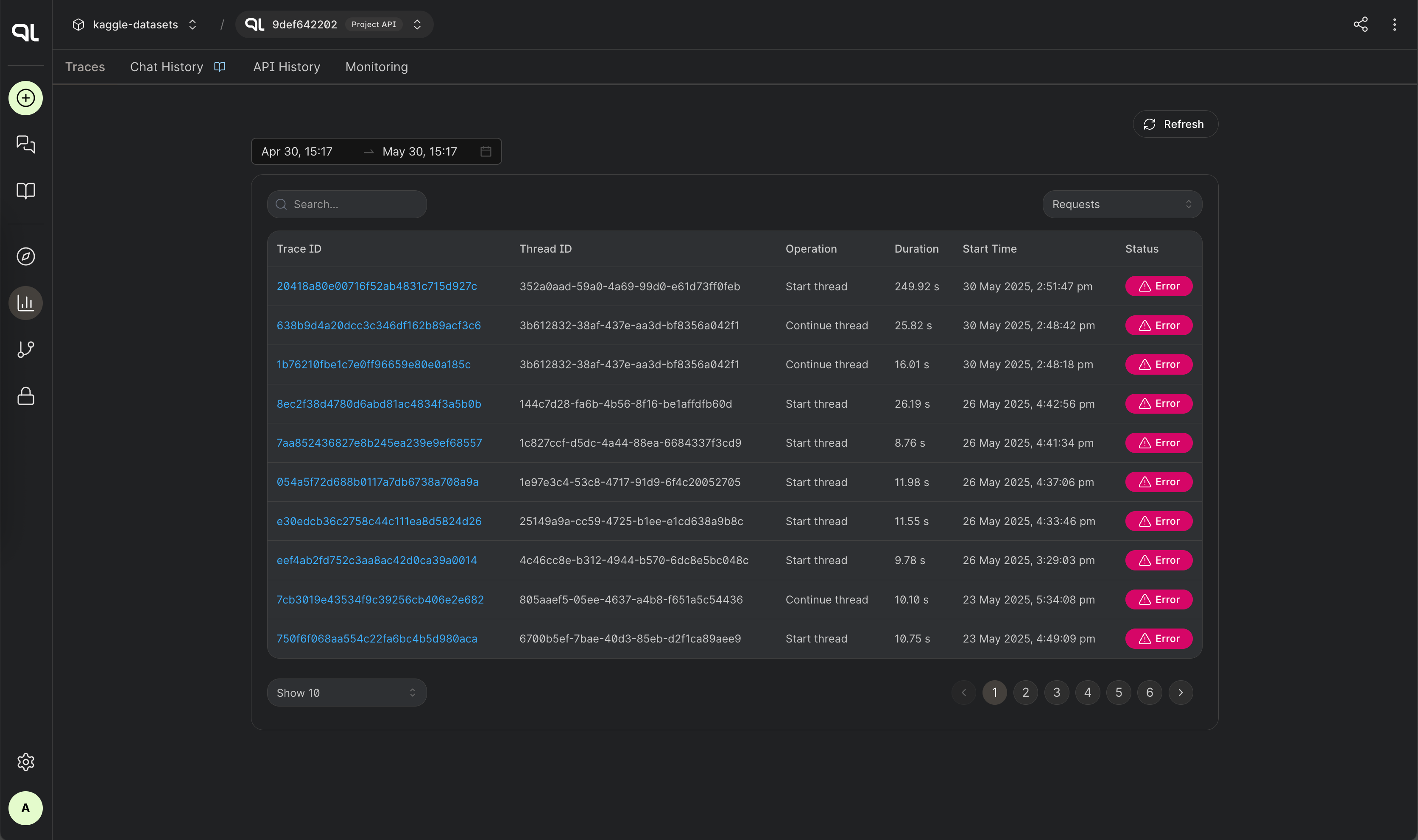
The traces table displays the following columns:
- Trace ID - Unique identifier for the trace (clickable to view details)
- Thread ID - Associated thread identifier or operation type for API requests
- Operation - The specific PromptQL operation performed:
Start thread- New thread creationContinue thread- Thread continuationExecute Program- Program execution API callNatural Language Query- Query API call
- Duration - Execution time in seconds
- Start Time - When the operation occurred (local timezone)
- Status - Success (green checkmark) or Error (red warning)
Filtering & Search
Filter traces by request type (Requests/Errors), search by Thread ID or Trace ID, and select custom date ranges.
Trace details
Click on any Trace ID to view detailed trace information:
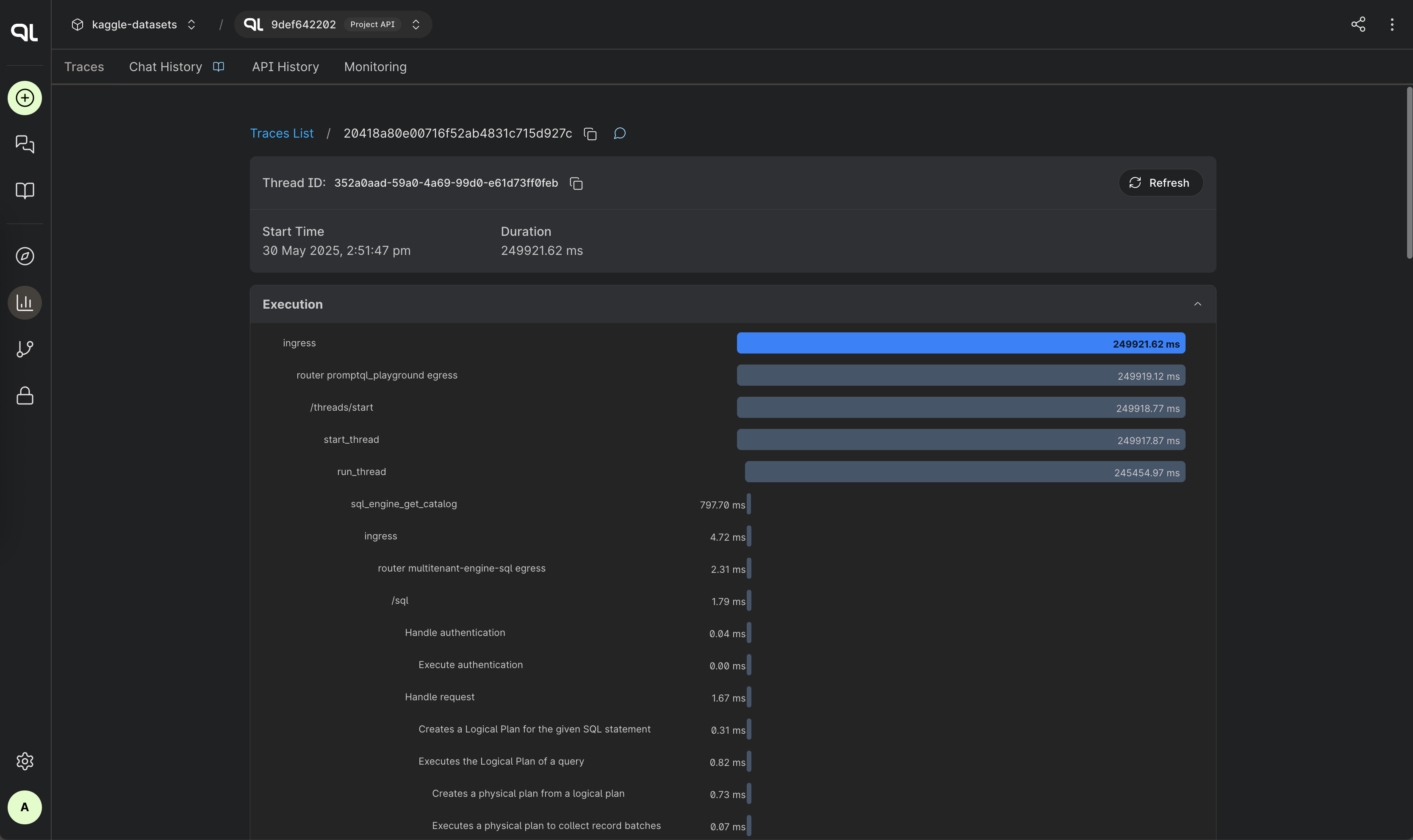
Overview section
The overview section includes general information, such as the thread's ID, its start time, and the duration.
Execution waterfall
The execution section shows:
- Span hierarchy - Visual representation of trace spans
- Timing information - Duration and timing for each span
- Error details - Stack traces and error messages for failed operations
- Performance metrics - Detailed timing breakdown
Requirements
- PromptQL must be enabled for your project
- Valid project FQDN required for trace collection
- Traces are retained based on your data retention policy